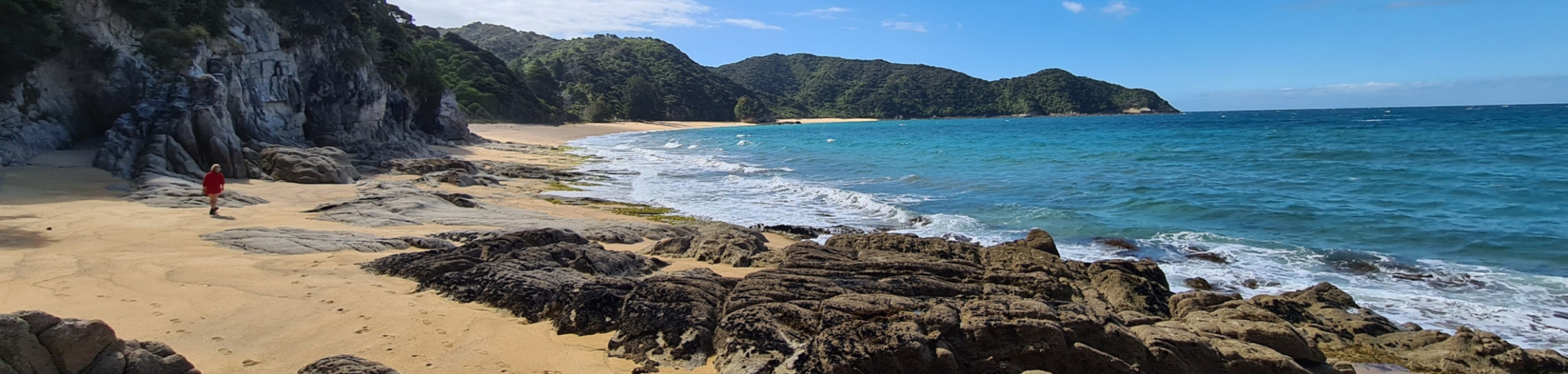
The Abel Tasman Coast Track is New Zealand's most accessible Great Walk, on account of water taxi services to a number of bays along the track which allow you to walk as much or as little of it as you like. This guide covers the track's history, the route itself, and the practical detail that makes the difference between a good hike and a great one.
A Park with a Deep History
The Coast Track traverses the full coastline of its namesake national park: New Zealand's smallest. The park’s human history goes back roughly 700 years, evidenced by Māori middens and pā (fortified village) sites along the coast, with the historic iwi (tribe) Ngāti Tūmatakōkiri present at the time Europeans arrived. On 18 December 1642, the Dutch explorer Abel Tasman anchored two ships near Golden Bay, becoming the first European to reach New Zealand, but he never set foot on land here. Tasman in his ship’s journal recorded that a small boat ferrying between his two ships was rammed by a waka (canoe) the next morning, a skirmish followed, and four of Tasman's crew were killed. Tasman named the bay ‘Murderers Bay’ and left immediately. It would be another 128 years before Captain James Cook sailed past, twice, in 1770 and 1773, without landing either time due to unfavourable winds. The French explorer Dumont D'Urville properly charted the coastline in 1827, naming Adele Island after his wife, and the adjacent Astrolabe Roadstead after his ship.
European settlement and attempts at farming, logging and quarrying followed in the 1850’s, but were unviable by the 1930’s and the land remained relatively underdeveloped and available for protection when its conservation values were recognized in the 1940’s.
The park was established on 16 December 1942, to coincide with the 300th anniversary of Tasman's visit, largely due to the efforts of ornithologist and conservationist Pérrine Moncrieff, who campaigned for the land to be protected. It has grown since: most recently with purchase of seven hectares at Awaroa Inlet, after a successful public crowdfunding campaign, a detail that says a lot about how fond New Zealanders are of this particular stretch of coast. Some private enclaves of holiday homes remain, mostly at Torrent Bay and Awaroa.
Since the park’s establishment the environment has recovered to such an extent that little sign of former extractive land use remains. Most notable in recent years has been a landscape-scale philanthropy funded restoration effort to bring back the native birdsong.
The Track at a Glance
The most walked section, Marahau to Totaranui, runs 45 kilometres one way and can be walked in either direction, typically over three to four days. Water taxis service both ends and bays in between, which means you are never fully committed to walking the whole distance if the weather or your legs have other ideas. The one genuine logistical catch is the Awaroa Inlet crossing, which can only be made within a window of one hour thirty minutes to two hours either side of low tide, so checking a tide timetable before you plan your days is essential. The wider national park draws as many as 300,000 visitors a year, making it New Zealand's most visited national park, though the great majority of those are day trippers on kayak tours and short walks rather than multi-day trampers, so the track itself never feels as crowded as that headline figure suggests.
Combining Walking and Kayaking
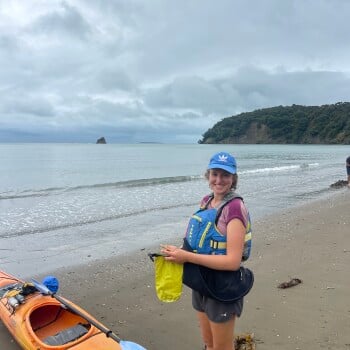
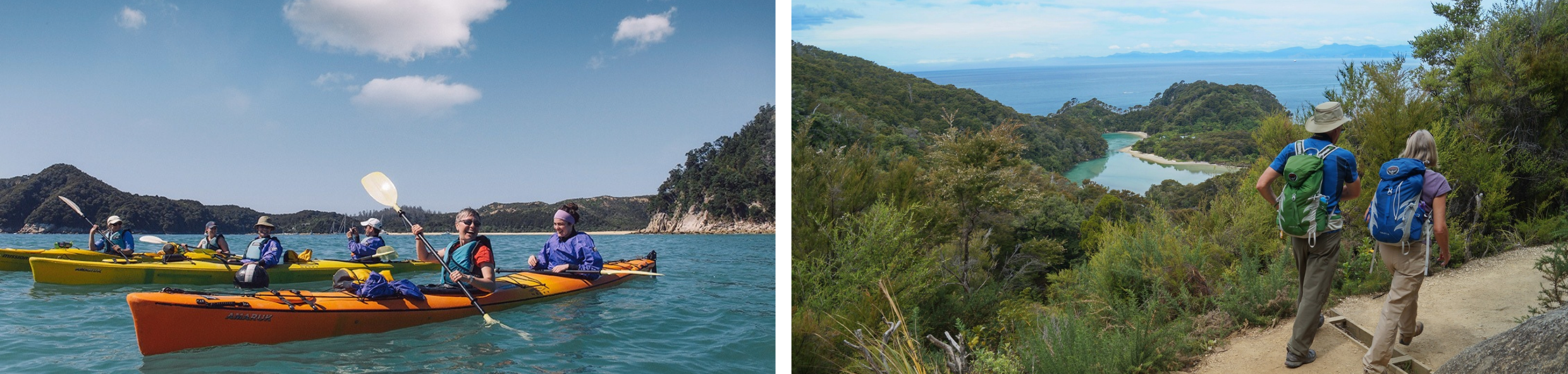
Since kayaking is such a major part of how people experience this park, it's worth knowing the rough paddling times between key points: Marahau to Observation Beach is around three hours, Marahau to Anchorage around four, Anchorage to Bark Bay about two, and Bark Bay to Onetahuti roughly ninety minutes. Many visitors mix a kayak leg with a walking leg in the same day, using a water taxi to reposition, which is part of what makes this Great Walk uniquely flexible.
Booking the Track Independently
If you're walking independently, the track has four huts, Anchorage, Bark Bay, and Awaroa on the Marahau to Totaranui section, and Whariwharangi in the north of the park, plus nineteen campsites. All of them must be booked in advance year round through the Department of Conservation website, with no exceptions even for a single night. Huts here are relatively comfortable, to Great Walk standards with flush toilets, though you still need to bring your own stove, food, and sleeping bag. During the summer (Oct-April), expect to pay NZ$84 a night for an international adult and NZ$55 for a New Zealand resident, dropping to NZ$33 for any adult in winter (July-Aug) and NZ$ 42 outside those seasons, and half rates for children (5-17 years). Campsites provide toilets and cooking shelters with differential summer pricing of NZ$31/21 for adults. Check the Department of Conservation website for up to date pricing. Turning up without a valid booking can mean a penalty fee or being turned away if the hut or campsite is full. Book your DOC dates first, then book your water taxi connections separately with an operator such as Abel Tasman AquaTaxi or Wilsons Abel Tasman, since the two booking systems aren't linked and you need to match your boat booking with your track days.
Highlights Along the Way
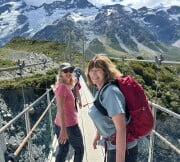
The most varied section is the 11.5 km stretch between Bark Bay and Anchorage, taking three to four hours depending on the tidal Torrent Bay crossing, and including the 47 metre Falls River swing bridge, Cleopatra's Pool, a clear green swimming hole tucked into the coastal forest, and the golden sands of Torrent Bay and Anchorage Beaches. From Anchorage, the Pitt Head Loop is a worthwhile short detour, 3.4 km return, taking in views over the headland and the remains of a pā and old kumara gardens, without needing to be part of a longer day.
Wildlife You Might See
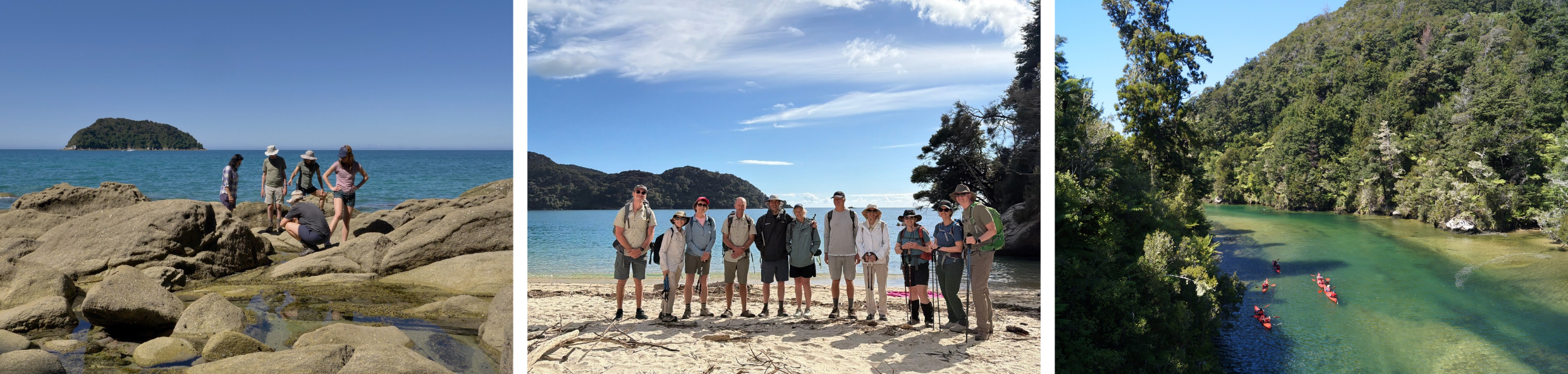
Abel Tasman's mild coastal climate supports genuinely abundant birdlife: listen for tūī, bellbird and reintroduced kākā through the forest sections, and watch for shags, gannets, and little blue penguins diving just offshore. Fur seals regularly haul out on the rocks around Adele Island, a predator-free sanctuary just off the coast, and stops to view them are a common feature of water taxi trips.
Practical Tips Before You Go
Depending on your stepping off point to access the park, Kaiteriteri or Marahau cafes have the last real coffee, or the first one waiting for you on the way out, and the Fat Tui Burger food truck parked in Marahau has a strong claim to one of the best burgers in the South Island. Pack sunblock, a swimsuit, comfortable hiking footwear, and water sandals for the tidal crossings. If you are self-driving and combining a cruise with a day hike, plan your start and finish from the same point, Marahau or Kaiteriteri, since the road between the two is around 7.5 km and not really suited to walking, with only limited shuttle options.
How Fit Do You Need to Be
Our guided Abel Tasman trips, the 3-Day, 5-Day, and Kayak and Hike options, are all Grade B, described on each trip page as a ‘soft adventure’ with an element of challenge. That fits the track itself: well-formed and largely flat, but still enough distance and sun exposure across several days to reward a reasonable general fitness level rather than none at all. The similarly graded South Island Grand Hikes itinerary includes a full day in the park, including scenic water taxi transfers and the highlights of the Bark Bay to Anchorage track section.
Frequently Asked Questions
How long does it take to walk the Abel Tasman Coast Track?
Marahau to Totaranui is usually walked over three to four days, though water taxis make it easy to shorten this to a single day hike section between bays.
Do I need to time my walk around the tides?
Yes, for the Awaroa Inlet crossing specifically, which is only safely passable within a window of one and a half to two hours either side of low tide. Other sections of the track are not tide-dependent, since they have longer alternative high tide routes.
Is the Abel Tasman Coast Track suitable for families?
Yes, it's one of the most family-friendly Great Walks in the country, with moderate climbs, on well-formed tracks, frequent swimming spots, and water taxis that let families choose their own walking distance each day.
Can I do a day hike rather than the full multi-day track?
Yes. Combining a water taxi or coastal cruise with a shorter walking section, such as Bark Bay to Anchorage, is a popular way to experience the park's highlights without committing to the full three days.
What should I pack specifically for this track?
Beyond standard hiking gear, sunblock, a swimsuit, and water sandals for tidal crossings are worth having, since this is one of the warmer, more swim-friendly Great Walks.
Walking Abel Tasman With Us
If you would rather have the lodges, meals, and water taxi logistics handled for you, our Abel Tasman 3-Day and 5-Day trips walk this same coastline with only a day pack to carry, and our Kayak and Hike option adds paddling for those who want to see the coastline from the water as well as the track. South Island Grand Hikes offers one day of Coast Track highlights as part of a full South Island itinerary.
Words by Martin, HikingNZ

 Kiwi-Style Hiking
 Great Walks
 Hiking Tours
 Alpine Hikes
 Custom Groups