“This morn I was awakd by the singing of the birds ashore from whence we are distant not a quarter of a mile, the numbers of them were certainly very great who seemd to strain their throats with emulation perhaps; their voices were certainly the most melodious wild musick I have ever heard, almost imitating small bells but with the most tuneable silver sound imaginable…”
A diary entry from Botanist, Joseph Banks, written on 17 January 1770, prior to European settlement, about the birdlife at Tōtaranui Queen Charlotte Sound.
Aotearoa New Zealand is a place like no other, a landmass which existed and evolved in isolation for millions of years, where ancient forests whispered stories, birds sang without fear of predators, and rugged coastlines brimmed with life found nowhere else on Earth, but this natural paradise hasn’t always been safe from harm. In fact, the story of New Zealand’s biosecurity threats is one of close calls, dedicated people, and an extraordinary conservation response that continues to inspire the world.
How did we get here?
New Zealand’s isolation gave rise to a unique web of life: flightless birds like the kiwi and takahē, giant wētā, the one-of-a-kind tuatara and forest giants such as the mighty kauri tree. For millions of years, unique species thrived in isolation, until the arrival of our tūpuna (ancestors) and settlers who journeyed here to call this land home.
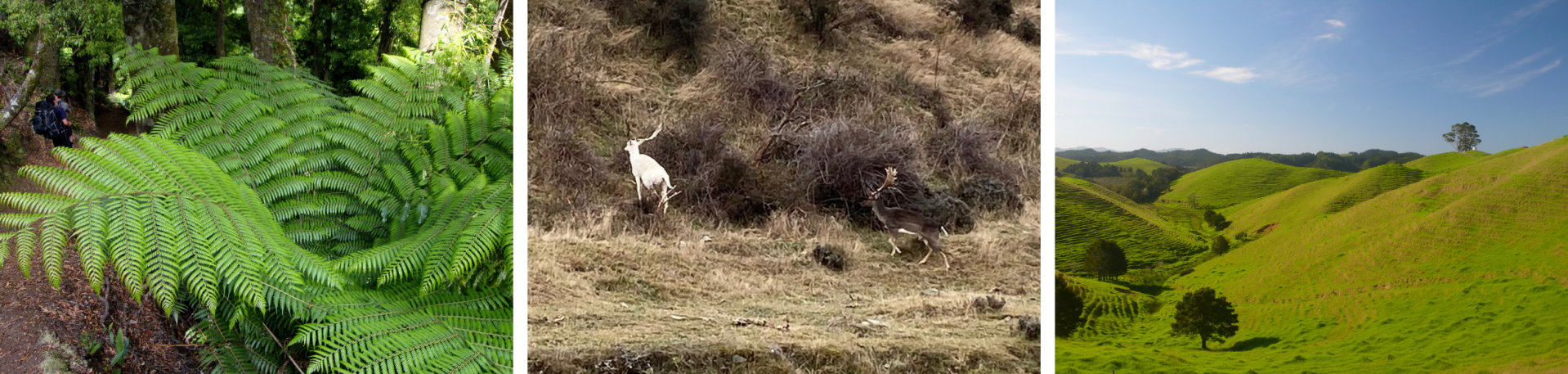
Polynesian settlers brought the first wave of change around 750 years ago, with arrivals needing food and shelter resources, and also bringing with them the kiore, Pacific rat and kurī, dogs. European settlers followed in the 1800s, along with a suite of new animals like stoats, possums, deer, rabbits and invasive plants that disrupted the natural balance. Many of these introductions were viewed as a way of bringing a little bit of home to a new land, like deer for hunting, rabbits for fur trade, sparrows and blackbirds to hear familiar birdsong in a garden, or gorse bushes brought from Scotland to form hedge rows. They may have seemed homely, harmless, or economically advantageous at the time, but many native species simply weren’t equipped to survive the onslaught of new predators and competitors. The results were rapid and devastating; habitat loss, widespread extinction, and declining ecosystems.
Moa, Māori and the first lessons
You may have heard or read about the moa, a flightless bird of which there were a number of different species found in all corners of the country, from sub-alpine forests to offshore islands, they stood up to 3.6 metres tall and weighed up to 249kg. The moa was valuable resource to Māori, with every part being utilised; meat to feed communities, skin and feathers for clothing and bones for fishhooks and pendants. Within only a couple of hundred years of their arrival, Māori had hunted the moa to extinction. Our modern sensibilities may view this as destructive and thoughtless, however it is worth considering that Māori settlement in Aotearoa came without the understanding of the reproductive and life cycle of the moa. Research suggests that moa were very long lived, took at least 5 years to reach sexual maturity, and had slow and low reproduction rates, likely only producing one egg every few years. Hunting without population replacement meant that before Māori grasped the effect of their actions, the moa was gone. This loss likely contributed to the Māori concept of kaitiakitanga, guardianship, learning to preserve and protect resources and whenua (land) for whanau (family), and future generations. The grief and lesson of the loss never left Māori, who have the whakatauki (proverb); Kua ngaro i te ngaro o te moa, Lost, as the moa was lost.
Silent Forests
Hikers are often shocked to find that many of our forests are very quiet and often devoid of birdsong, unlike Banks’ description of the “most melodious wild musick”.
New Zealand’s curious and fearless birds, many of which, nest low in tress, or even on the ground are easy pickings for the introduced predators, quickly wiping birds, their eggs and fledglings from forests.
Bird numbers have dropped so sharply that vast stretches of forest have become quiet, the songs replaced by a kind of uneasy hush.
The Scourge of Rabbits
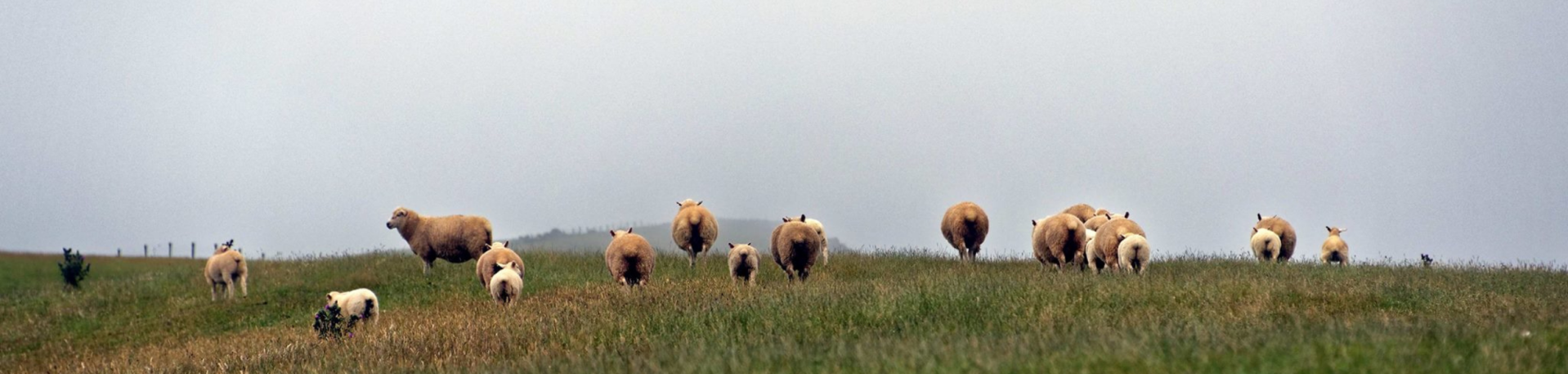
Native plants, forests and animals weren’t the only ones affected, early farming operations were also devastated by the introduction of pests. One well known tale is that of the disastrous introduction of rabbits to the South Island. Imported in the mid 1800s for fur trading, rabbits did what they do best, and with their many offspring (without any natural predators to manage numbers) ate everything in sight. Stock starved, tussock lands, paddocks, crops and top soil became degraded and would soon grow nothing at all.
Management Boards were established to try and contain the catastrophe, and in 1889, the Hurunui Rabbit Board built a fence on the south side of the Hurunui River and two years later, the Amuri and Hurunui Rabbit Boards erected a 135-kilometre fence from the head of the Waiau River to the sea. At best, these fences merely slowed the advancing horde. Farmers made other desperate attempts, even purchasing cats from nearby towns in the hopes they’d manage the rabbit numbers, but conversely, the cats only added to the mess by further devastating the native bird population, as a much easier option to chasing rabbits. There is now a considerable population of feral cats in the backcountry, are difficult predators to manage and remain one of the most significant threats to our native species. Rabbits certainly remain an issue, but the population was diminished somewhat by the illegal introduction of the calicivirus in the early 1990s (another excellent biosecurity story, but one for another time).
The Dawn of New Zealand’s Conservation Movement
New Zealand’s early decades of European settlement didn’t place much emphasis on protecting native species. The call to action began small, but robust by conservationists like Richard Henry, who passionately advocated for, and protected our most vulnerable birds. In 1894, he was appointed the caretaker and curator of New Zealand’s very first island sanctuary - Resolution Island (since then, islands like Tiritiri Mātangi, Ulva, Codfish, Adele and Kapiti are now also thriving sanctuaries where native wildlife can bounce back in safety).
By the mid-20th century, it had become clear that even more change was needed, and in the 1960s a passionate grassroots movement took off, driven by ordinary New Zealanders who refused to let their country’s natural heritage vanish. Conservation was no longer just for greenies and hippies, it was for everyone, with the first major campaign seeing New Zealanders protesting against a government project and signing petitions to protect Lake Manapouri. The lakeshore was under threat from a proposed rise in the lake level for additional electricity generation to run an aluminium smelter. Thousands of New Zealanders were inspired to battle this plan, seeing over 265,000 people signing a petition to the government. The people and conservation won - the lake was granted statutory protection by the government and lake levels are now carefully controlled to mimic natural fluctuations.
From there, landcare groups, school kids, and local iwi began rolling up their sleeves to plant trees, build predator fences, and rescue endangered species. Government agencies like the Department of Conservation (DOC) lead national efforts, but many of the boldest and most innovative projects come from communities.
In recent decades, incredible conservation projects have emerged:
- Project Janszoon in Abel Tasman National Park is restoring an entire ecosystem.
- Zealandia in Wellington created the world’s first fully fenced urban eco-sanctuary.
- Kākāpō Recovery: These very special birds are closely monitored and managed through breeding and tracking programme.
- Predator Free 2050, an ambitious nationwide campaign, aims to rid the country of feral cats, rats, stoats, and possums entirely within a generation.
Biosecurity - Protection from the inside out
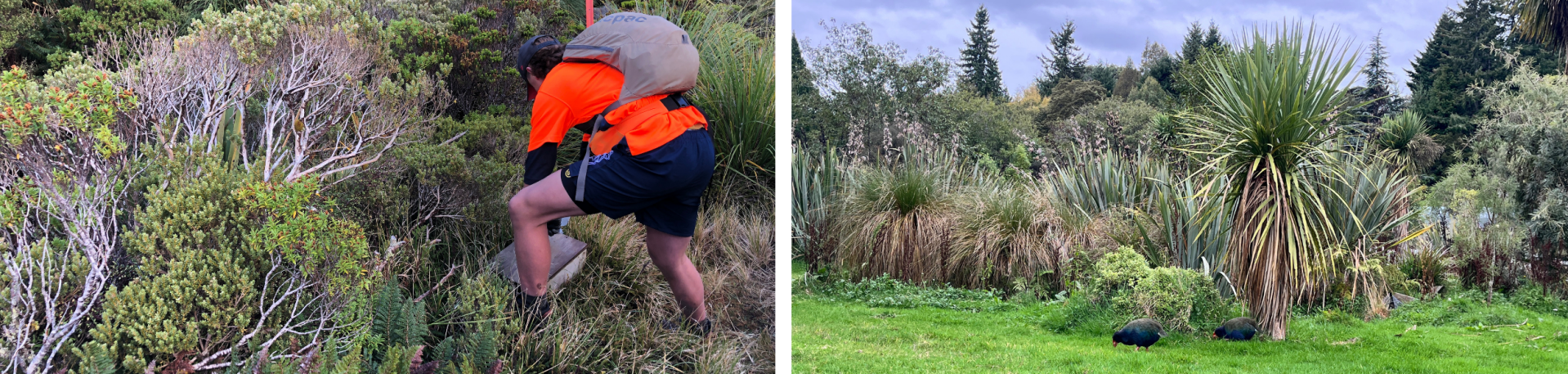
Alongside growing conservation efforts, came the development of one of the most advanced biosecurity systems in the world, with border control measures that would rival any fortress (even your hiking boots and snacks get scrutinised), monitoring cargo, ships and aircraft, New Zealand’s biosecurity efforts are now deeply embedded in national identity. The aim? To keep harmful pests and diseases out, and quickly contain any that slip through.
Managed by the Ministry for Primary Industries, Biosecurity New Zealand staff guard our borders. You’ll see them in international arrivals, checking your luggage and moving around with detector dogs who are sniffing out restricted items. The staff are trained in the science of biosecurity, are extremely knowledgeable and professional yet friendly – they're there to help you, as well as protect our border.
Visitors can support biosecurity and conservation efforts in truly meaningful ways:
- Thoroughly clean and dry your hiking and camping equipment before you arrive in New Zealand
- At the border, declare any food and camping equipment you have with you
- If you've brought food with you, declare anything you're unsure about.
- Always clean your boots and gear between your hikes.
- Stick to marked trails to protect sensitive habitats.
- Support eco-certified tour operators and conservation groups.
- Respect signs, quarantine zones and protected wildlife.
How does Hiking New Zealand contribute to conservation?
The Hiking New Zealand team are committed to awakening people to the benefits of the wilderness. We contribute to the restoration, protection and enhancement of the natural environment around us. Moreover, Hiking New Zealand’s sister company, Southern Rewilding, have been engaged in predator control operations in Arthur’s Pass National Park, directly safeguarding critically endangered species like the Kākāriki karaka, mohua, and whio. We’re also diligently establishing new pockets of precious habitat in Canterbury and on Rēkohu Chatham Island.
We also play our part in leading the world in sustainable tourism. We fully support and adhere to the New Zealand Tourism Sustainability Commitment and the Tiaki Promise, a commitment to protecting and preserving our home. We ask the same of you when you hike with us.
A Story of Hope and Collective Power
Aotearoa New Zealand’s conservation story isn’t just about saving birds or planting trees, it’s about identity, resilience, and a shared belief in protecting something truly precious. Today, whether you’re hiking a backcountry track or visiting a city reserve, you’re stepping into a landscape shaped by thousands of hands and hearts committed to kaitiakitanga, guardianship.
The best part? This is a story that’s still being written. Every trap set, every native seed planted, every visitor who cleans their boots before hitting the trail contributes to a future where New Zealand’s wild beauty not only survives but thrives. Knowledge is power and with our collective action, we're protecting our whenua for generations to come.
Whaowhia te kete mātauranga Fill the basket of knowledge.
Words by Anna Morris

 Kiwi-Style Hiking
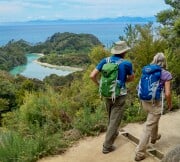 Great Walks
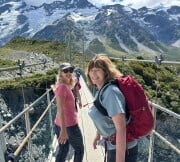 Hiking Tours
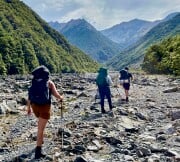 Alpine Hikes
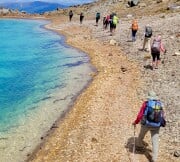 Custom Groups